
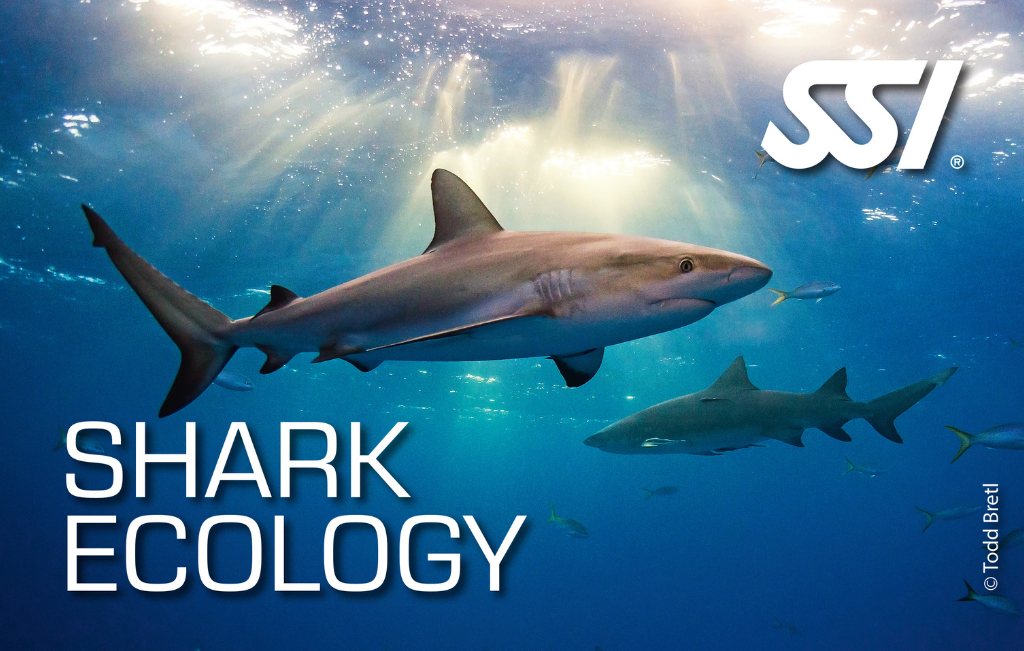
Shark Ecology
Availability: Contact us for booking information

Shark Ecology
Replace Fear with Fascination
Description: Sharks are the ocean's most misunderstood predators. For decades, they have been feared as mindless eating machines, but the reality is far more complex and captivating. The SSI Shark Ecology program peels back the layers of myth to reveal the truth about these evolutionary masterpieces.
In this course, you will explore the biology that makes sharks the ultimate apex predators—from their electrosensory systems to their unique reproduction methods. You will learn to interpret their behaviors, identify common species, and understand the critical role they play in keeping the ocean’s ecosystems balanced and healthy.
Why Choose the SSI Shark Ecology Course?
-
The "Shark Week" Experience: If you love watching sharks on TV, you will love learning the science behind the spectacle.
- Safe & Flexible: This SSI Ecology program is a knowledge-based certification. It can be completed entirely as a "dry" course (classroom/digital only) or combined with optional observation dives.
-
Digital Access: Dive into the materials immediately with the MySSI App. Learn at your own pace, anytime, anywhere.
-
Earn Your Ratings: This specialty counts as one of the required certifications for SSI Advanced Open Water and helps you progress toward the SSI Master Diver rating.
What You Will Learn:
-
Ancient Biology: How sharks have survived for over 400 million years and how their senses (like the Ampullae of Lorenzini) work.
-
Behavior & Language: How to read a shark’s body language to understand when it is relaxed, curious, or agitated.
-
Identification: Key physical characteristics to help you distinguish between species like Bull, Tiger, Nurse, and Reef Sharks.
-
Conservation Crisis: The devastating impact of shark finning and overfishing, and why a world without sharks is a disaster for our oceans.
Course Prerequisites:
- Minimum Age: 10 Years Old
-
Certification: None required for the academic portion (Open to snorkelers and non-divers!).