
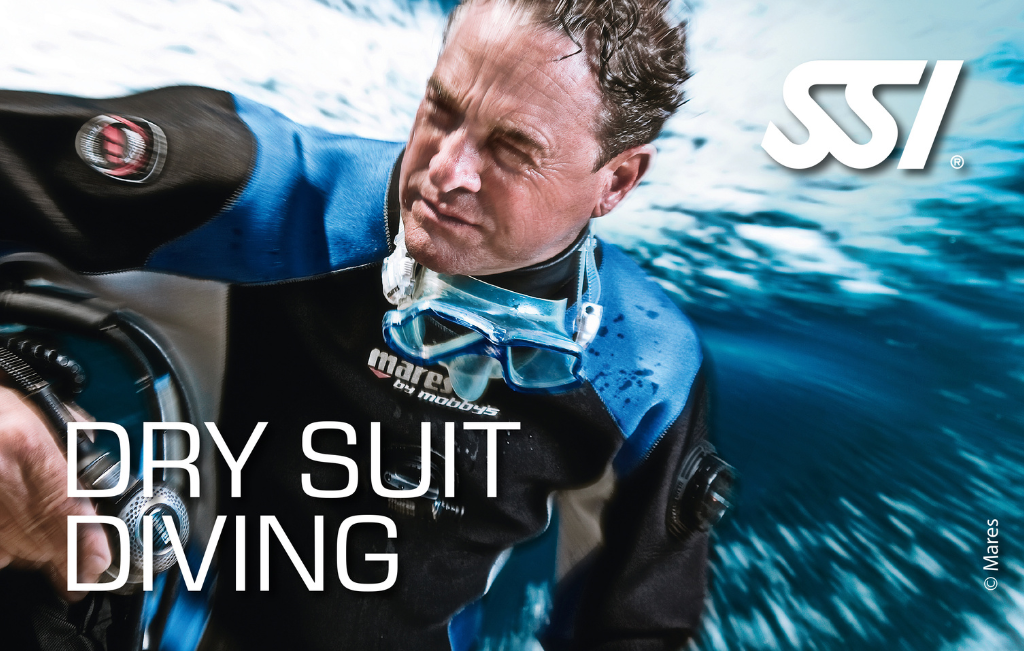
Dry Suit Diver
All-Inclusive option available: $500.00
Availability: Contact us for booking information

Stay Warm, Dive Longer – SSI Dry Suit Diving
The cold never bothered you anyway. Don’t let dropping temperatures end your diving season. The SSI Dry Suit Diving specialty unlocks the door to year-round diving, no matter how cold the water gets. Whether you want to explore the kelp forests of California, the crystal-clear fissures of Iceland, or simply stay toasty during long winter dives right here in Florida, a dry suit is the ultimate game-changer.
Unlike a wetsuit, which uses your body heat to warm a layer of water, a dry suit keeps you completely dry and insulated with air. This means you stay warmer, burn less energy, and can enjoy significantly longer dive times.
Why Take a Dry Suit Course?
-
Year-Round Diving: Keep diving locally even when the winter chill sets in.
-
Unlock Cold Destinations: Gain the skills needed to dive iconic cold-water sites like Silfra (Iceland), Scapa Flow (Scotland), or the Great Lakes wrecks.
-
Stay Warm on Surface: The biggest advantage? You are dry and wind-proof the moment you get out of the water—no shivering on the boat ride back.
-
Extended Bottom Time: When you aren't fighting the cold, your air consumption improves, allowing for longer, more relaxed dives.
What You Will Learn
Diving dry requires a different set of buoyancy skills than a wetsuit. We teach you how to master the "bubble."
-
Buoyancy Control: Learn how to manage the air inside your suit to maintain perfect trim and avoid the "floaty feet" sensation.
-
Suit Squeeze Management: Techniques to add air as you descend to prevent uncomfortable squeezing.
-
Emergency Procedures: How to recover safely if you flip upside down or if a valve malfunctions.
-
Care & Maintenance: Dry suits are an investment. Learn how to wax zippers, protect latex seals, and store your suit properly to make it last for years.
Course Pricing & What's Included
Choose the course option that works best for you. The Base Course price is currently published; an All-Inclusive price is being finalized.
Base Course
The Base Course Price includes:
- SSI eLearning and required course materials
- Professional instructor instruction and training
- Required dive site entry fees
All-Inclusive Course
Includes everything in the Base Course, plus:
- The All-Inclusive price is not currently finalized.
Required Dry Suit Equipment
The course requires specialized dry-suit equipment, including:
- Drysuit
- Inflation and exhaust valves
- Low-pressure inflator hose
- Thermal undergarments
- Drysuit hood and gloves
- Adjusted weight configuration
The drysuit itself is not included in the $300 Base Course Price. Students may provide or rent required dry-suit equipment.
Equipment Options
Our published All-Inclusive Course Price is based on a standard mid-range equipment package for required student equipment.
Students may choose lower-priced or higher-priced equipment when permitted for the course.
- Choosing lower-priced equipment may decrease your final course cost.
- Choosing higher-priced equipment may increase your final course cost.
- Your final customer price will reflect the equipment selections actually made.
The required equipment category is determined by the course, but the specific brand, model, and price may vary based on the student's selection.
VA Students
VA students and non-VA students are charged the same published course prices. Space Coast Dive does not create a separate VA price, VA discount, VA surcharge, or VA-only equipment package.
The published All-Inclusive Course Price represents our standard course package and is available at the same price to all students.
VA payment or reimbursement is determined under the applicable VA education benefit rules and the student's individual eligibility.
Space Coast Dive does not guarantee that optional equipment upgrades or additional costs above the standard package will be reimbursed by the VA. Students using VA education benefits should confirm with their VA education benefits representative or applicable certifying official how their individual benefit applies to the approved course and its eligible charges.
Expand Your Range
Ready for the extreme? The Dry Suit specialty is a mandatory prerequisite for SSI Ice Diving. It is also highly recommended for technical diving, where long decompression stops make thermal protection critical.