
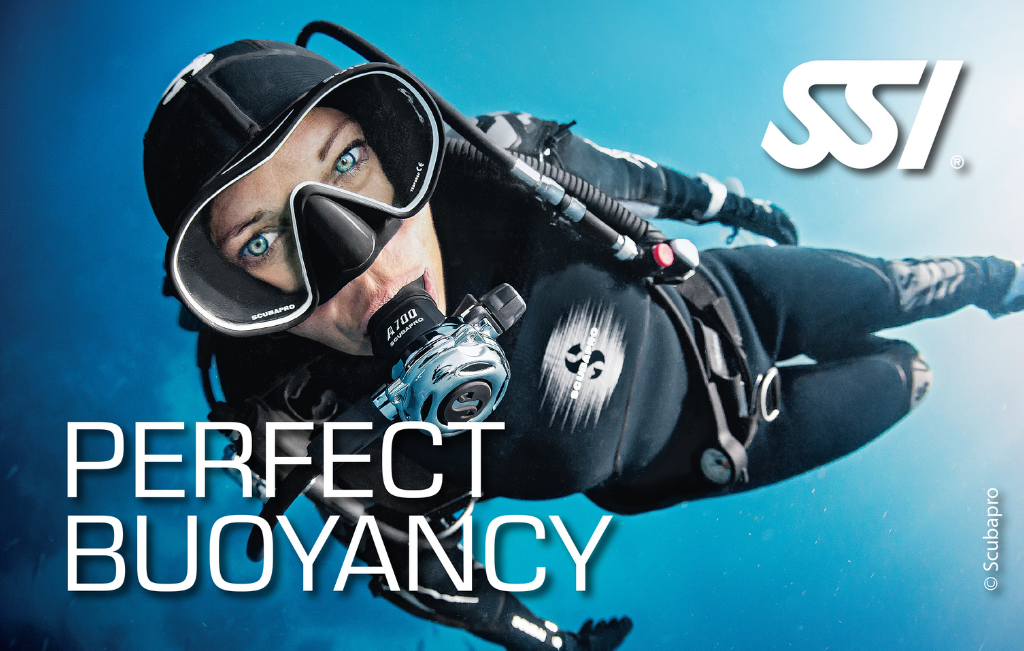
Perfect Buoyancy
All-Inclusive option available: $420.00
Availability: Contact us for booking information

Master the Hover – SSI Perfect Buoyancy
Stop swimming, start gliding. If you find yourself constantly adjusting your BCD, kicking to stay off the bottom, or running out of air before your buddy, this is the course for you. SSI Perfect Buoyancy is widely considered the single best investment a new diver can make in their skills.
Buoyancy is the secret sauce of scuba diving. When you master it, you stop fighting the water and start blending into it. You will move with less effort, consume less air, and hover effortlessly like a marine creature. It’s the difference between looking like a struggling beginner and a seasoned professional.
Why Take a Perfect Buoyancy Course?
-
Double Your Bottom Time: Struggling to stay neutral burns oxygen. Proper buoyancy lowers your heart rate and drastically improves your air consumption.
-
Protect the Reef: Learn to glide over fragile corals without making accidental contact.
-
Get Closer to Wildlife: Marine life is less threatened by a calm, motionless diver, allowing for much closer encounters.
-
Take Better Photos: You can’t take a clear shot if you are bobbing up and down. Stability is the foundation of underwater photography.
What You Will Learn
We take the guesswork out of weighting. You will leave this course knowing exactly how much lead you need—and where to put it.
-
Proper Weighting: Most divers carry too much weight. We will strip away the excess to find your "sweet spot."
-
Trim Adjustment: Learn to distribute weight so you stay perfectly horizontal (flat) in the water, rather than swimming diagonally.
-
Breath Control: Learn to use your lungs as a fine-tuning tool to rise and fall inches without ever touching your inflator hose.
-
Advanced Finning: Introduction to the "frog kick" and "helicopter turn" for precise maneuvering without silting up the bottom.
Course Pricing & What's Included
Choose the course option that works best for you. Our All-Inclusive price combines the course, rental equipment, tanks, and required specialty equipment into one convenient package.
Base Course
The Base Course Price includes:
- SSI eLearning and required course materials
- Professional instructor instruction and training
- Required dive site entry fees
All-Inclusive Course
Includes everything in the Base Course, plus:
- BCD rental
- Regulator with gauges rental
- Dive computer rental
- Wetsuit rental
- Cylinders/tanks required to complete the course
- Required specialty equipment
Required Perfect Buoyancy Equipment
Required specialty equipment includes:
- Compass
- SMB and spool
- Required weight
Students may provide their own equipment or use rental equipment where applicable.
Equipment Options
Our published All-Inclusive Course Price is based on a standard mid-range equipment package for required student equipment.
Students may choose lower-priced or higher-priced equipment when permitted for the course.
- Choosing lower-priced equipment may decrease your final course cost.
- Choosing higher-priced equipment may increase your final course cost.
- Your final customer price will reflect the equipment selections actually made.
The required equipment category is determined by the course, but the specific brand, model, and price may vary based on the student's selection.
VA Students
VA students and non-VA students are charged the same published course prices. Space Coast Dive does not create a separate VA price, VA discount, VA surcharge, or VA-only equipment package.
The published All-Inclusive Course Price represents our standard course package and is available at the same price to all students.
VA payment or reimbursement is determined under the applicable VA education benefit rules and the student's individual eligibility.
Space Coast Dive does not guarantee that optional equipment upgrades or additional costs above the standard package will be reimbursed by the VA. Students using VA education benefits should confirm with their VA education benefits representative or applicable certifying official how their individual benefit applies to the approved course and its eligible charges.
Expand Your Range
Ready to look cool underwater? Perfect Buoyancy is a prerequisite for advanced environments like Wreck and Cavern diving, where hitting the bottom is not an option. It is also the number one skill needed for Underwater Photography.